
Farm Succession Planning in Southwest Ohio: Passing Down the Family Farm Without Losing It to Taxes or Family Disputes
- September 12, 2026
- James Schroeder
- 4:02 am
Quick Summary: Passing down a family farm in Brown County, Highland County, or Adams County, Ohio takes more than a will. Farm families need to understand the difference between “farm estate planning” (who inherits the land, equipment, and other assets) and “farm transition planning” (keeping the farming operation itself running for the next generation). This article explains that distinction, introduced by Ohio State University Extension, and how trusts, LLCs, and deeds work together to protect the farm from taxes and family conflict. Attorney James Schroeder is a Member Professional of the Ohio Farm Transition Network and has represented farm families in Southwest Ohio since 2019.
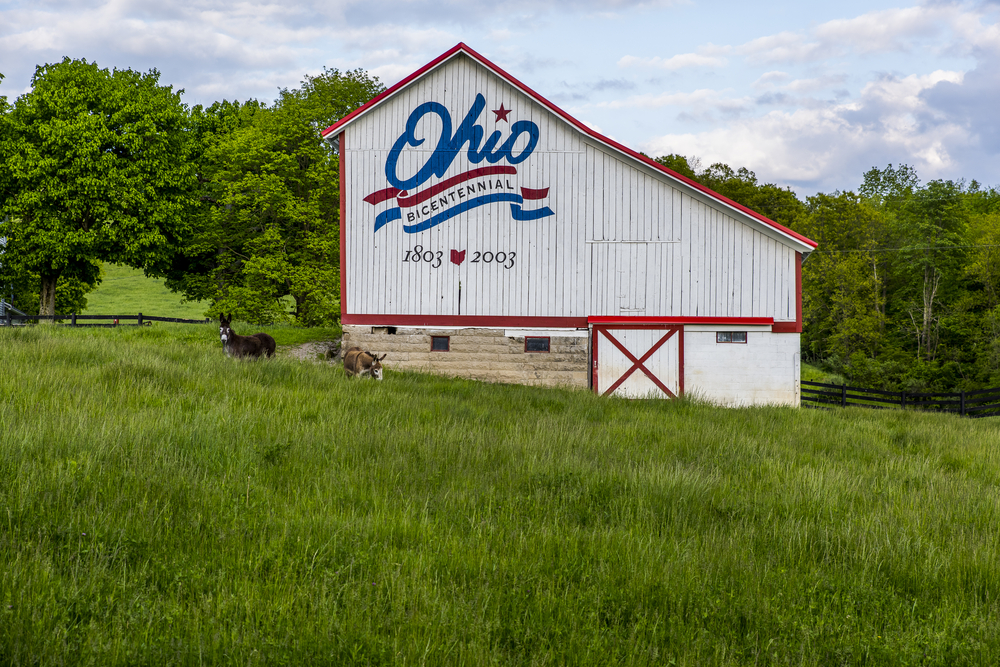
Southwest Ohio is farm country. Drive the back roads of Brown County, Highland County, and Adams County and you will pass corn and soybean fields, cattle operations, and family farms that have been worked by the same last name for three, four, or five generations. When I moved to Brown County in 1995 one of my favorite things was to drive the backroads on Saturday mornings and listen to Cowboy Corner on C103 checking out these family legacy operations. For these families, the farm is not just an investment. It is a livelihood, a home, and often the largest asset in the estate.
That combination — high value, hard-to-divide property, and deep emotional attachment — is exactly why farm succession is one of the most difficult planning challenges a Southwest Ohio family will face. Done poorly, it can trigger an estate tax bill the farm cannot afford to pay, force the sale of land that has been in the family for a century, or split brothers and sisters into opposing camps over who gets what. Done well, it protects both the assets and the relationships.
Two Kinds of Planning, One Family Farm
Most farm families think they only need one document: a will, or maybe a trust. In reality, Ohio State University Extension draws an important distinction between two related but different processes — farm estate planning and farm transition planning — and understanding both is the first step toward protecting the operation.
Farm estate planning is the process of deciding how the farm’s assets — land, buildings, livestock, crops, machinery, savings, and debts — will be distributed after the death of the principal operator, or operators, of the farm (Ohio State University Extension, Ohioline factsheet ANR-47). This is the “who gets what” question, and it is answered through tools like wills, trusts, deeds, and beneficiary designations.
Farm transition planning, on the other hand, is the process by which ownership and management of the farm business are transferred to the next generation while the operation keeps running (Ohio State University Extension, Ohioline factsheet ANR-47). Transition planning asks a harder question: does the family want to pass the farm down as a working business, or simply as a collection of assets to be divided? If the goal is to keep the operation intact and viable, a transition plan has to address not just asset transfer, but leadership, decision-making authority, retirement income for the senior generation, and fairness to any heirs who do not work the farm (Ohio State University Farm Office, Estate & Transition Planning library).
Put simply: an estate plan decides who inherits the farm. A transition plan decides whether there is still a farm left to inherit — and whether it can keep operating without the family falling apart in the process.
Most lawyers only talk about the first half of that equation. The strongest plans address both.
Where to Start: The Ohio Farm Transition Network
For Southwest Ohio farm families who are not sure where to begin, a great starting point is the Ohio Farm Transition Network (OFTN), a collaborative program housed within Ohio State University Extension’s Farm Office. OFTN was founded by a coalition that includes AgCredit, Farm Credit Mid-America, Nationwide, the Ohio Department of Agriculture, the Ohio Farm Bureau Federation, the Ohio Soybean Association, OSU Extension, and the USDA Farm Service Agency, with the goal of training attorneys, accountants, lenders, and other professionals in consistent, high-quality farm transition planning practices statewide (Ohio Farm Transition Network).
Attorney James Schroeder is a Member Professional listed with the Ohio Farm Transition Network, with a profile identifying his specialization in agricultural law and farm succession planning and his service area covering Adams, Brown, Clinton, Fayette, Highland, Pike, Ross, and Scioto Counties (James Schroeder, Ohio State University Farm Office directory). Since returning to Brown County in 2019, James has focused much of his practice on advising and representing farm families through exactly the kind of estate and transition planning discussed here.
The Legal Tools That Bring It Together
Once a family understands the difference between estate planning and transition planning, the next step is choosing the right combination of legal tools. In most Southwest Ohio farm plans, three tools do the heavy lifting:
- A properly drafted trust can hold farm real estate and equipment, keep the farm out of probate, and set rules for how and when the next generation gains full control — which is especially useful when some heirs work the farm and others do not.
- LLCs and other business entities. Placing the farming operation into an LLC or family limited partnership separates management of the business from ownership of the underlying land, allowing the senior generation to gradually transfer ownership interests (and reduce potential estate tax exposure) while retaining operational control until they are ready to step back.
- How title to farmland is held — individually, jointly, through a trust, or through an entity — determines how smoothly (or how painfully) that land passes to the next generation, and whether it avoids probate court altogether.
Used together, a trust, an LLC, and a properly recorded deed can accomplish both goals at once: they answer the estate-planning question of who ultimately owns the farm, and the transition-planning question of who runs it and how the business keeps functioning along the way.
Avoiding the Two Biggest Pitfalls: Taxes and Family Disputes
Farm families who skip formal succession planning tend to run into the same two problems.
Taxes. Farmland and equipment can push an estate’s value well past what a family expects, especially once appreciated land values are factored in. Without lifetime gifting strategies, properly structured trusts, or business entities that allow for valuation discounts, a farm estate can face a tax bill large enough to force the sale of land or equipment just to pay it.
Family disputes. Perhaps even more common than the tax problem is the family problem. When one child has worked the farm for twenty years and another has not, an estate plan that simply splits everything “equally” can feel deeply unfair to the child who stayed — and can leave the farming heir without enough ownership or cash flow to keep the operation running. Transition planning exists specifically to work through those hard conversations in advance, rather than leaving siblings to fight it out after a parent’s death.
Serving Farm Families in Brown, Highland, and Adams County, Ohio
Ohio Legacy Law works with farm families throughout Southwest Ohio, including Brown County, Highland County, and Adams County, to build estate and transition plans that protect both the land and the relationships that go with it. Whether the goal is minimizing estate taxes on farmland, structuring an LLC for the family farming operation, drafting or updating deeds, or simply starting the conversation about who takes over the farm, our office can help you get started the right way — before a crisis forces the issue.
Protect the Family Farm Before It’s Too Late
Farm succession is not a conversation to put off. Land values, family circumstances, and health can all change quickly, and the families who plan early are the ones who keep both their farms and their relationships intact.
Call (937) 402-2348 to schedule a strategy session, or visit us at 338 West Main Street, Hillsboro, Ohio. Our office is open Monday to Friday from 10 AM to 5 PM (Summer and Holiday Hours Vary, please call ahead), with ample parking and ramp access.
This article is provided for general informational purposes only and does not constitute legal advice. Every estate plan is different, and you should consult with an attorney regarding your specific circumstances.